
A mysterious ecosystem is living inside your body – where hundreds of trillions of microorganisms coexist, communicate, and profoundly influence every function of your life. It is not some alien microscopic world, but your "gut."
"gut flora" and "gut microbiota" often appear in health discussions. They open doors to knowledge about immunity, metabolism, emotions, and longevity.
But are they the same thing? Correctly naming the microbiome that lives with you can open up a new perspective on your health.
For foundational knowledge, start with This gut health guide.
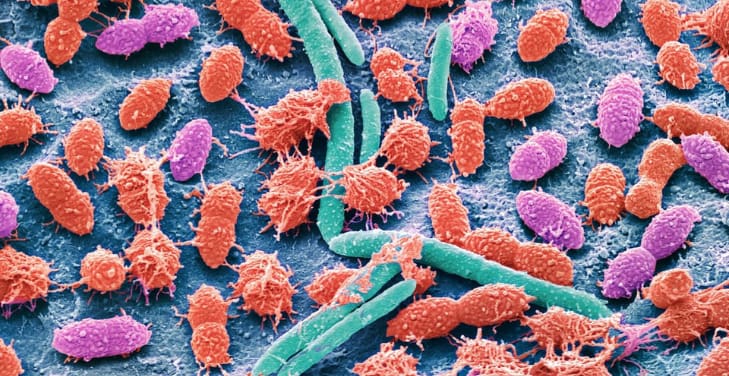
Your gut microbiota helps break down food and fight harmful bacteria.
What Is Gut Flora? A Historical Term Explained
The term "gut flora" has been a cornerstone of the language of gut biology for decades. From classical medicine to modern microbiology, it has been used to describe the microbial community that inhabits the human gastrointestinal tract. Although it has given way to more precise terminology, "gut flora" still carries historical significance and reflects the early stages of medical understanding of the microbiome.
Linguistic Origin
"Flora" is Latin for "plant." Scientists in the early 20th century used the word to refer to microorganisms because they thought of them as living vegetation in the gut. This concept reflected the visual association: a microbial garden, complex, vibrant, and ever-changing.
Popularity
Throughout the 20th century, "gut flora" appeared widely in textbooks, lectures, and research. It has become the common language in clinical medicine and applied microbiology. Every conference and every medical debate has recognized the essential role of "flora" in maintaining human health.
Historical significance
The birth of the "gut flora" concept marked a major step forward in understanding the interaction between microorganisms and the body. Although no longer an official term, it is still a milestone in discovering endogenous microorganisms.
What Is Gut Microbiota? The More Accurate Term
"Gut microbiota" is the modern term that most accurately reflects the microflora in the human digestive tract. This is a collection of bacteria and includes fungi, viruses, protozoa, and other symbiotic microorganisms. Each individual person carries a unique, rich microbial map that deeply interacts with the health of the whole body. This term is chosen by the international scientific community to comprehensively describe both the biological, medical, and micro-ecosystems inside the body.
Diverse composition
Gut microbiota contains hundreds of trillions of microbial cells, extending from the oral cavity to the colon. Bacteria comprise most of the population, but other groups such as yeasts (e.g., Candida), bacteriophages, and protozoans such as Blastocystis hominis also shape the internal ecosystem.
Individualization
Each person possesses a unique microbiota structure, like a fingerprint. Genetics, diet, environment, and physiology contribute to this difference.
Modern applications
The term "gut microbiota" is used in scientific literature, international databases such as PubMed, and WHO clinical guidelines. It is the basis for research on immunology, metabolism, neuropsychiatry, and chronic diseases.
Are They the Same Thing? Similarities and Overlaps
"Gut flora" and "gut microbiota" describe the assemblage of microorganisms inhabiting the gastrointestinal tract. Still, they originate from two different frames of reference – one classically descriptive, the other modernly biologically taxonomic. Both terms refer to a microscopic ecosystem that has the potential to profoundly influence human metabolism, immunity, emotion, and cell survival. They suggest the same biological entity but use different languages to express it.
Similar Components
Both terms encompass groups of microorganisms that inhabit the gut, such as bacteria, fungi, viruses, prokaryotes, and protozoans. They coexist in a state of dynamic equilibrium and form a multidimensional ecosystem with densities of up to hundreds of trillions of cells.
Overlapping functions
The microorganisms in the "flora" or "microbiota" are involved in essential processes such as fiber breakdown, vitamin K and B12 synthesis, detoxification, regulation of the gut-brain axis, and modulation of inflammatory responses.
Context of use
The two terms are interchangeable in colloquial communication to convey the same concept. However, in academic writing, professionals prefer "microbiota" to reflect the accuracy of biological classification.
Why Scientists Prefer 'Microbiota' Today
The global scientific community chose the term " microbiota " because of its precision, comprehensiveness, and ability to accurately reflect the structure of the microbial ecosystem in the human body. This term not only provides a clear biological classification but also fits perfectly into the language of molecular medicine, systems biology, and microbiological genetics. Standardizing terminology helps synchronize knowledge and improve reliability in clinical research and public health.
Clear scientific definition
"Microbiota" refers to the entire population of microorganisms that inhabit a specific environment – in this case, the digestive system. It includes bacteria, fungi, viruses, protozoans, and archaea. This concept is compatible with modern biological classification systems.
Global Recognition
Health organizations such as the WHO, NIH, and CDC officially use "microbiota" in scientific literature, treatment guidelines, and databases such as PubMed. This reflects an international consensus on the preference for terminology with a solid scientific basis.
Future Directions
The development of microbiology, microbial transplantation therapy, and personalized medicine are all based on "microbiota." Correct terminology is key to accessing, analyzing, and applying microbiological knowledge to treat disease and improve overall health.
Roles of Gut Flora and Microbiota in Your Body
The gut microbiota is not simply a collection of parasitic organisms but a second organ that functions alongside the nervous, endocrine, and immune systems. Each strain of microbiota plays a unique role, but together, they function as a sophisticated biological network that controls a wide range of life processes in the body. Their presence and interactions are essential for maintaining life, repairing damage, and optimizing metabolic function.
Digestion and Absorption
Bacteria in the microbiota, such as Bacteroides and Firmicutes, help break down complex polysaccharides, convert dietary fiber into short-chain fatty acids (SCFAs), and aid in the absorption of essential micronutrients such as magnesium, zinc, and iron.
Vitamin and Metabolite Synthesis
Some strains of Lactobacillus and Bifidobacterium are involved in synthesizing vitamins K, B12, folate, and biotin – nutrients essential for hematology, neurology, and energy metabolism.
Immunoregulation
Microbiota directly influence the intestinal mucosal immune system through interactions with dendritic cells and T-regs. They train the body to distinguish between pathogens and harmless molecules.
Influence on the Brain-Gut Axis
The gut microbiota releases serotonin, GABA, and other neurotransmitters, which shape emotional states, cognition, and sleep through the brain-gut–biota axis.
What Influences Gut Flora and Microbiota Balance
The balance of the gut microbiota results from a complex series of interactions between endogenous and exogenous organisms. Any change in the living environment, nutritional behavior, or psychological state can instantly reshape the microbiota structure. When symbiotic microorganisms thrive in harmony, they maintain a strong biological barrier and provide comprehensive protection for the body. Imbalances create conditions for opportunistic bacteria to flourish, causing inflammation and disrupting essential metabolic functions.
Diet
Foods containing soluble fiber, polyphenols, and probiotics, such as yogurt, kimchi, or kefir, promote the growth of beneficial strains. Meanwhile, ultra-processed foods, refined sugars, and saturated fats weaken microbiota diversity.
Medications
Broad-spectrum antibiotics, corticosteroids, antacids, and oral contraceptives induce profound changes in microbiota density and composition, affecting immunity and energy metabolism.
Biological and environmental factors
Cesarean section, lack of breast milk, air pollution, household chemicals, and lack of exposure to nature during childhood reduce exposure to beneficial microorganisms, thereby impoverishing the endogenous microecosystem.
Psychological and lifestyle
Prolonged stress, sleep deprivation, and circadian rhythm disruption alter cortisol levels and affect the stability of the brain-gut axis, impairing microbial diversity and promoting systemic inflammation.
How to Support Your Microbiota Daily
Caring for your gut microbiome is a continuous journey that starts with simple yet impactful choices. Every meal, every sleep, and every exposure to nature shapes the microbiota—the microsystem that influences digestion, immunity, mood, and longevity. Daily actions accumulate to create the ideal habitat for symbiotic microorganisms to thrive and function optimally.
Nourish with food
Supplementing with prebiotic-rich foods like bananas, artichokes, oats, and garlic helps feed beneficial bacteria. Live probiotic sources like plain yogurt, sauerkraut, and kefir boost microbiome diversity.
Lifestyle adjustments
Getting enough sleep, exercising regularly, and meditating help regulate the neuroendocrine-microbiome axis. These activities reduce cortisol, stabilize gut pH, and protect the integrity of the mucosal barrier.
Limit Disruptors
Avoid frequent exposure to antibiotics, synthetic preservatives, and chronic stress. These are factors that reduce biodiversity in the digestive system.
Conclusion
"Gut flora" reflects an important historical period in medicine, but "gut microbiota" provides a precise and appropriate language for current scientific progress. Using the right terminology is the foundation for a systematic and effective approach to microbiology.
The gut microbiota is not only an object of study but also a biological partner in maintaining health. Smart nutrition, a stable lifestyle, and precise language form a strong triangle to protect the microbiota for life.
Every choice you make today shapes the structure of your microbiota tomorrow. Writing right, living right, and nurturing right are the core of a sustainable health strategy from within.
New to this topic? Begin your journey with an intro to gut health.
Frequently Asked Questions About Gut Flora and Microbiota
-
Is gut flora still used in modern medicine?
Old documents still use "gut flora," but medical organizations and researchers have now switched to "gut microbiota" to fully reflect the structure of the intestinal microflora. -
What does gut microbiota include?
Gut microbiota includes bacteria, fungi, viruses, protozoa, and archaea living symbiotically in the digestive tract, forming a complex ecosystem that plays an essential role in human health. -
Why is it necessary to maintain intestinal microbial diversity?
Diversity helps balance immunity, stabilize metabolism, and prevent the development of pathogenic microorganisms. The more diverse the microflora, the more flexible it is in responding to physiological and environmental changes. -
Does stress affect the microbiota?
Chronic stress activates the brain-gut axis, alters hormone levels, and leads to microbiota imbalances, increasing the risk of digestive disorders, systemic inflammation, and impaired immune function. -
Should you take a daily probiotic supplement?
Probiotic use may support the growth of beneficial microorganisms, especially after antibiotic use. However, the effectiveness depends on the bacterial strain, dosage, and initial microbiota status.
